
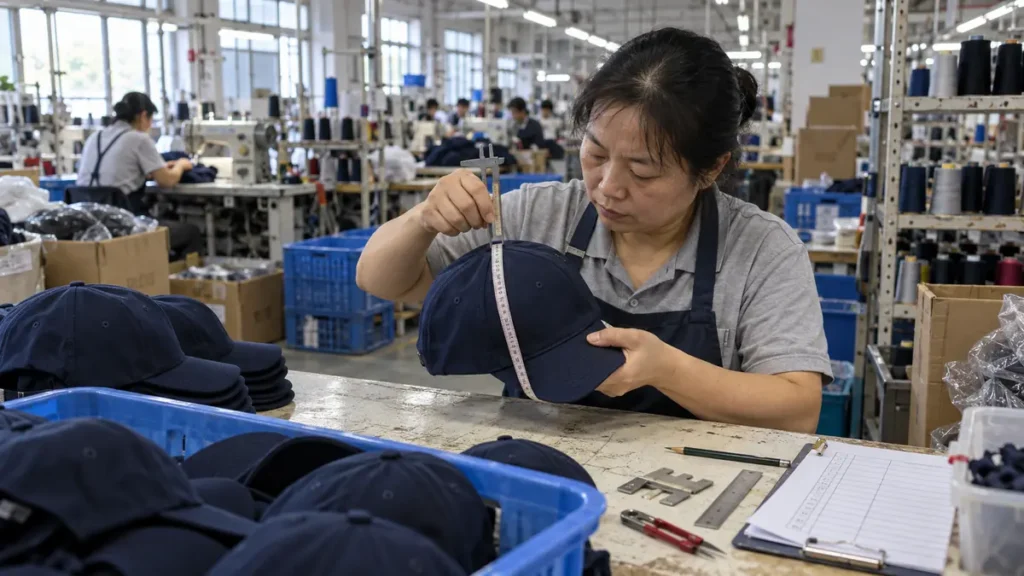
Quality control in cap manufacturing is not a single inspection performed at the end of an order. It is a series of checks carried out from incoming materials through sewing, finishing and packing. Finding a problem early is faster and more reliable than trying to correct it after every cap is complete.

### Material and Component Checks

Before cutting, the production team compares the fabric, mesh, thread, brim inserts, closures and labels with the confirmed specification. Color, texture, width and visible defects are reviewed, and materials are organized by order to reduce mixing.

When color consistency is important, materials should be assessed under stable lighting and against the approved swatch or sample.

### Cutting Accuracy

Cap shape begins with the pattern and cut panels. The cutting team checks panel direction, quantity and placement before bundles move to sewing. Incorrect grain direction or mixed panel sizes can affect symmetry and fit later in production.

Bundle identification also helps keep matching components together through the following processes.

### Logo and Decoration Inspection

Embroidery, printing and patches are checked for position, size, color and appearance. For embroidery, inspectors look for thread breaks, loose stitches, puckering and backing that has not been trimmed correctly.

A production sample or approved placement guide provides the reference. Checking the first pieces before the full run allows machine settings or artwork position to be corrected early.

### Inline Sewing Checks

During assembly, operators and line inspectors review seam allowance, stitch consistency, panel alignment, eyelets, brim attachment and closure installation. Measurements such as crown height and opening size may be checked at defined points.

Inline inspection is especially useful for preventing the same issue from continuing across a large batch.

### Shape, Finish and Cleanliness

After sewing, caps are trimmed, shaped and cleaned. Inspectors examine the front profile, brim curve, top button, internal seams and overall symmetry. Loose threads, fabric marks and excess backing are removed before packing.

For performance or special-construction caps, additional checks may be agreed according to the material and intended use.

### Final Inspection and Packing Verification

Finished goods are compared with the approved sample and order requirements. The inspection may cover workmanship, measurements, logo position, color, quantity, labels and packaging. Carton marks and assortment details are also checked before shipment.

### Clear Standards Produce Consistent Results

Quality decisions are most reliable when expectations are defined before production. A confirmed sample, specification sheet, measurement tolerances and packaging instructions give both buyer and factory the same reference.

No sewn product is created without natural production variation, but a structured control process keeps that variation within the agreed standard. Combining material checks, first-piece confirmation, inline inspection and final review helps deliver a more consistent bulk order and reduces avoidable rework.