
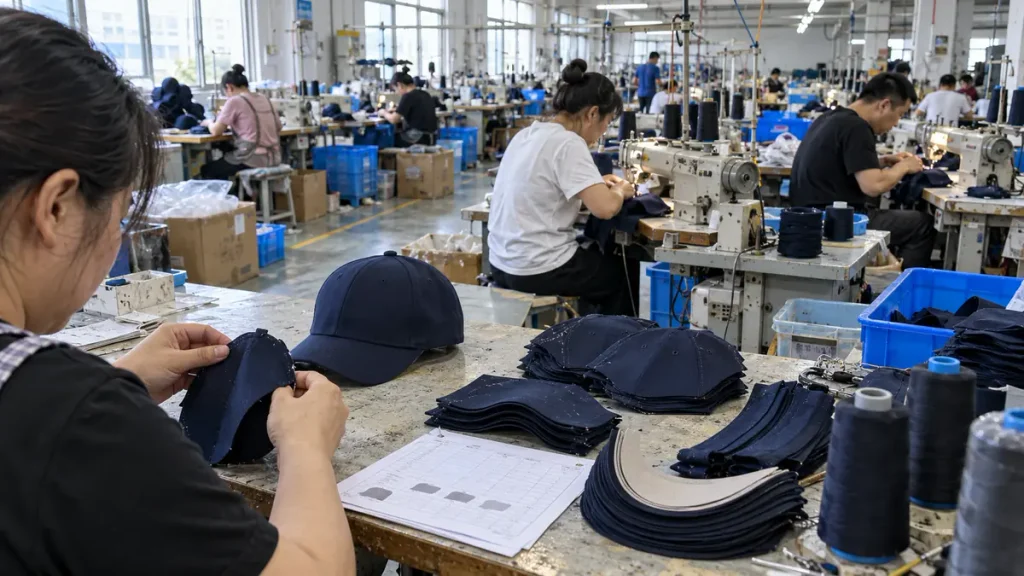
Sample approval is the point where a custom cap moves from development into controlled production. The approved sample provides a physical reference, but the factory must also translate every detail into materials, work instructions and repeatable checkpoints for the full order.

### Specifications Are Locked

Before bulk work begins, the team confirms the cap style, measurements, fabric, colors, logo process, closure, labels and packaging. The approved sample and final specification sheet should match.

Late changes can require new materials, revised artwork or another sample, so buyers should review every visible and internal detail before giving approval.

### Materials and Components Are Prepared

Fabric, mesh, brim inserts, sweatbands, thread, closures and labels are allocated to the order. Incoming items are checked against the selected references before they enter production.

The production plan then coordinates cutting, decoration, sewing, finishing, inspection and packing according to material availability and delivery requirements.

### Fabric Is Cut Into Controlled Bundles

Patterns are arranged according to fabric direction and construction requirements. Crown panels, brims and other pieces are cut and grouped into manageable bundles. Clear bundle control helps prevent size, color or component mixing.

Cutting accuracy matters because small panel differences can affect the final crown shape and seam alignment.

### Branding Is Applied at the Correct Stage

Front-panel embroidery or printing is often completed before the crown is fully assembled, allowing the panel to lie flat on the equipment. Patches and secondary branding may be attached at another stage depending on their position and construction.

The first production pieces are compared with the approved sample for logo size, placement, color and surface quality.

### Caps Move Through Sewing and Assembly

Operators join crown panels, add eyelets and top buttons, prepare the brim, attach the sweatband and install the closure. The exact sequence varies by cap style.

Workers use the approved sample and instructions as references, while inline checks monitor measurements, symmetry, stitch quality and component placement.

### Finishing Restores the Final Shape

Completed caps are trimmed and cleaned before shaping. Steam, molds or other suitable finishing methods may be used to present the intended crown and brim profile. The product is then allowed to settle before final inspection.

### Inspection and Packing Complete the Order

Finished caps are checked for appearance, measurements, logo position, sewing, cleanliness and packing requirements. Approved items are counted and packed according to the confirmed assortment, labels and carton instructions.

After sample approval, consistency becomes the main objective. A controlled handoff from development to production, supported by an approved sample and clear specification, helps each department work toward the same result. Buyers can support this process by confirming details promptly and avoiding design changes once materials and production have been scheduled.