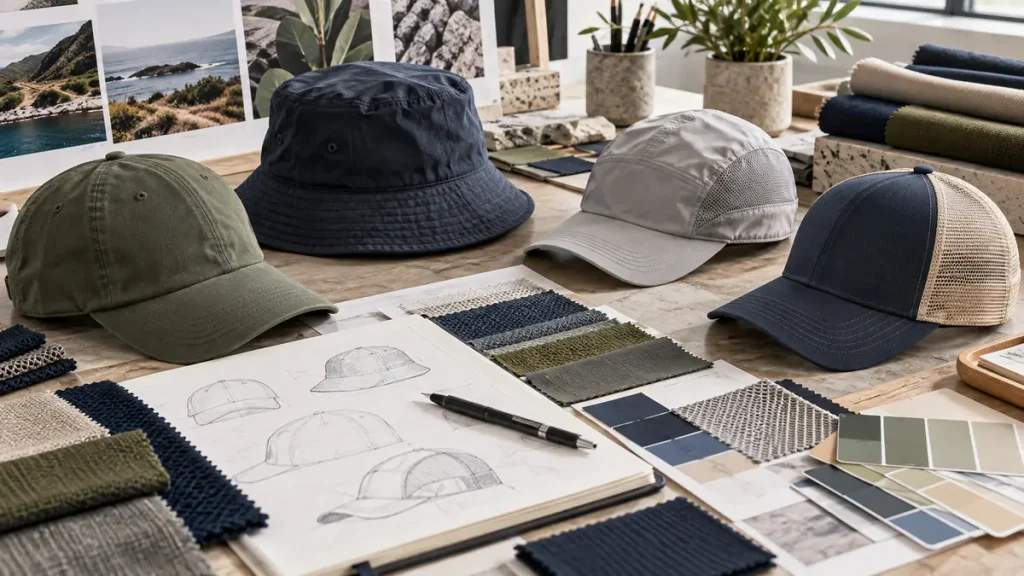
Custom headwear is moving beyond a logo placed on a standard blank. Brands increasingly use shape, texture, materials and small construction details to create products that feel intentional. The following five design directions can help buyers build a more distinctive cap collection without making production unnecessarily complex.

### 1. Refined Minimal Branding

Smaller logos, tonal embroidery and restrained color combinations can create a premium appearance. Instead of filling the front panel, brands may place a compact symbol on the side, use matching thread on the crown or add a discreet woven label near the closure.

Minimal branding depends on accuracy. Logo position, thread shade and stitch quality become more visible when the overall design is simple, so these details should be confirmed on a physical sample.

### 2. Texture as a Design Feature

Washed cotton, corduroy, ripstop, brushed fabric and technical mesh give a cap visual depth even when the color palette is limited. Contrasting a smooth crown with a textured brim or adding mesh panels can make a familiar silhouette feel new.

Material combinations should be tested for compatible weight and shrinkage. Fabrics that behave differently can affect the final shape after sewing or washing.

### 3. Functional Performance Details

Ventilation holes, moisture-managing sweatbands, reflective elements and adjustable webbing closures are no longer limited to professional sports products. They are also appearing in travel, outdoor and everyday lifestyle caps.

Functional details should solve a real use requirement. Adding too many features increases cost and can make the design feel busy. Start with the expected climate and activity, then select only the features that improve comfort or visibility.

### 4. Responsible Material Choices

Recycled polyester and other traceable material options are being considered by brands that want to improve product specifications. The design process still needs to evaluate hand feel, color, strength, decoration compatibility and availability rather than selecting a material from its description alone.

Buyers should request material documentation where required and approve an actual swatch or cap sample before placing a bulk order.

### 5. Flexible, Gender-Inclusive Silhouettes

Adjustable closures, balanced crown proportions and versatile colorways allow one cap style to work across a wider customer group. This can simplify inventory and make promotional programs easier to manage.

Fit should still be tested. Crown depth, opening shape and adjustment range can influence comfort even when two products carry the same size description.

### Turning Direction Into a Manufacturable Product

A useful design direction must be translated into specific decisions: cap shape, fabric code, color reference, logo process, dimensions, closure and packaging. Reference images communicate mood, but a specification sheet and approved sample define production.

Brands do not need to use every direction in one product. Selecting one or two ideas that support the intended wearer and price point usually creates a clearer result. Early discussion with the manufacturer can identify which details are practical, where sampling is needed and how to keep the design consistent in bulk production.