
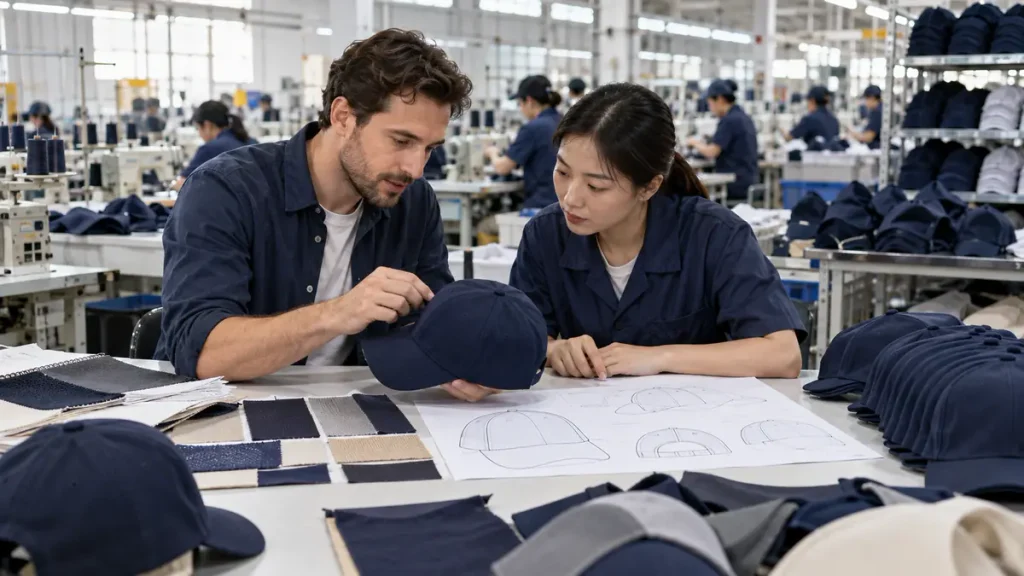
For brands ordering custom caps for the first time, the OEM production process can appear complicated. In practice, a successful project follows a clear sequence: requirement review, material selection, pattern development, sampling, approval, bulk production and quality inspection.

Understanding each stage helps buyers prepare the right information and reduce delays.

### 1. Project Requirements

The process begins with the buyer's product information. This may include a technical drawing, reference sample, product photo, logo artwork or an existing cap that needs to be reproduced.

Useful details include the cap style, target quantity, fabric preference, colors, logo method, size, closure, labels, packaging and required delivery schedule. If some specifications are not confirmed, the factory can recommend options based on the intended use and target budget.

### 2. Technical Review and Quotation

The manufacturer reviews the product structure, materials, decoration complexity and order requirements. Potential production risks should be identified at this stage, such as artwork that is too detailed for embroidery or a lightweight fabric that cannot support a structured crown.

A quotation can then be prepared according to the selected material, components, logo process, packaging and estimated quantity.

### 3. Pattern Making and Material Selection

After the project direction is confirmed, the cap pattern is prepared or adjusted. Fabric swatches, thread colors, mesh, closures and accessories are selected for sampling.

Color references or approved fabric swatches help reduce color differences. Buyers should also confirm whether the cap requires a structured or unstructured crown, flat or curved brim, and standard or custom sizing.

### 4. Prototype Sampling

The first sample is used to evaluate the cap shape, fit, materials, logo size, stitching and construction. It is normal for a new product to require adjustments after the first review.

Feedback should be specific and organized. Instead of requesting a general change, identify the exact issue, such as reducing the logo width, changing the brim curve or adjusting the crown height.

### 5. Sample Approval

Bulk production should begin only after the buyer approves the final sample and confirms all specifications. The approved sample becomes the main reference for materials, measurements, colors, branding and workmanship.

Any changes requested after approval may affect cost and production scheduling, so all details should be checked carefully before confirmation.

### 6. Bulk Production

The production stage may include fabric cutting, panel preparation, logo application, sewing, brim assembly, closure installation, finishing and shaping. Production teams follow the approved sample and confirmed specification sheet throughout the process.

Inline inspection helps identify issues before the order reaches final packing. Important checkpoints include seam alignment, logo position, cap measurements and color consistency.

### 7. Final Inspection and Packing

Finished caps are inspected for appearance, stitching, shape, decoration and cleanliness. Approved products are then packed according to the buyer's requirements, which may include individual bags, hangtags, inner boxes or export cartons.

Clear artwork, complete specifications, timely sample feedback and stable requirements help keep the project on schedule. When the buyer and manufacturer follow the same approved sample and specification, the transition from design to bulk production becomes more efficient and consistent.